Thistle
- Jul 30, 2025
- 2 min read
Updated: Oct 29, 2025

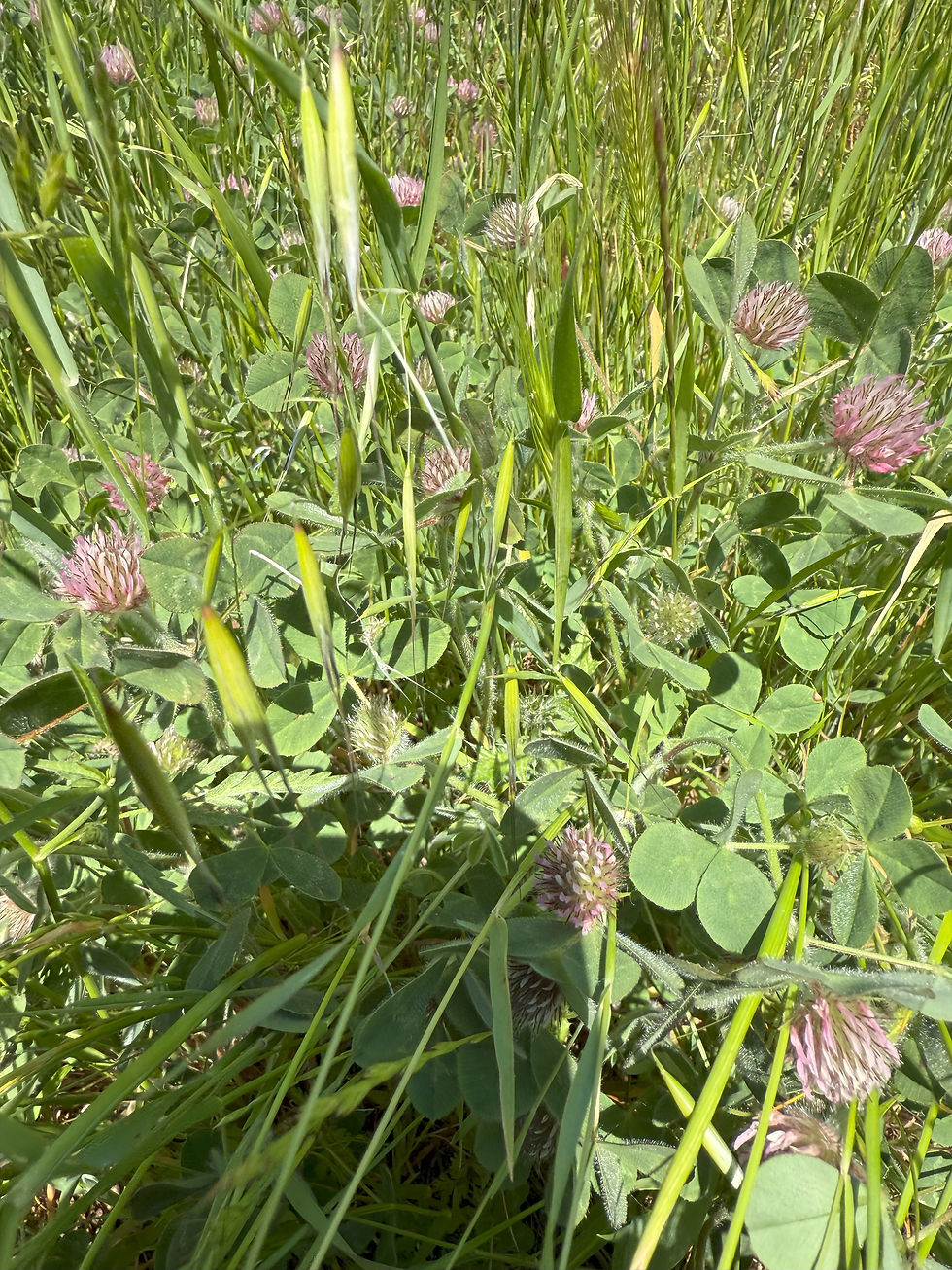
Thistles are found on meadows, pastures, and open fields in North America and much of the world. They are easily identified by their spiny, often white, leaves and large, bright purple flower heads that bloom over the summer. They are typically treated as weeds, but ecologically they are important plants that produce some of the richest nectar sources for bees, butterflies and other pollinators.
The genus contains a number of species with their own traditional uses. The most well known is the milk thistle (Silybum marianum). Used for centuries in herbal medicine, the seeds have been found to contain a group of flavonolignans called silymarin. These phytonutrients have been clinically demonstrated to aid the liver in detoxification, as well as protect liver cells against toxins and damage [1][2]. Milk thistle extracts are now used in clinical settings to treat liver disease, cirrhosis, and recovery after exposure to chemical toxins [2].
Many other wild thistles from the Cirsium and Carduus species, were also known traditionally as food and mild medicine by Native Americans and foragers. They peeled the young stems, roots, and shoots to eat after removing the spines [3][4]. Some used a decoction of the root as a mild tonic or diuretic. These uses are not as well researched as milk thistle, but demonstrate how wild thistles could nourish in times of scarcity.
Ecologically thistles provide valuable sustenance for pollinators, as well as seed-eating birds, particularly goldfinches. They are very resilient, capable of thriving in poor soil and disturbed ground, showing an adaptability [5][6].
Thistles demonstrate the powerful life lesson that strength and generosity can grow hand in hand. They can be prickly on the outside, but are filled with healing power for both people and the wild.
[1] National Center for Complementary and Integrative Health (NCCIH). “Milk Thistle: Usefulness and Safety.” U.S. Department of Health and Human Services, updated 2024. https://www.nccih.nih.gov/health/milk-thistle
[2] Tighe, Shane, et al. “Chronic Liver Disease and Silymarin: A Biochemical and Clinical Review.” Journal of Clinical and Translational Hepatology 8, no. 4 (2020): 454–458. https://doi.org/10.14218/JCTH.2020.00012.
[3] Northern Bushcraft. “Thistle (Cirsium spp.) – Edible & Foraging Notes.” https://www.northernbushcraft.com/plants/thistle/notes.htm
[4] U.S. National Park Service. “Edible Thistle, or Cirsium edule.” https://www.nps.gov/articles/000/edible-thistles.htm
[5] North Carolina State University Extension. “Cirsium (Plume Thistle).” https://plants.ces.ncsu.edu/plants/cirsium/
[6] The Prairie Ecologist. “Saving Pollinators, One Thistle at a Time.” August 26, 2015. https://prairieecologist.com/2015/08/26/saving-pollinators-one-thistle-at-a-time/