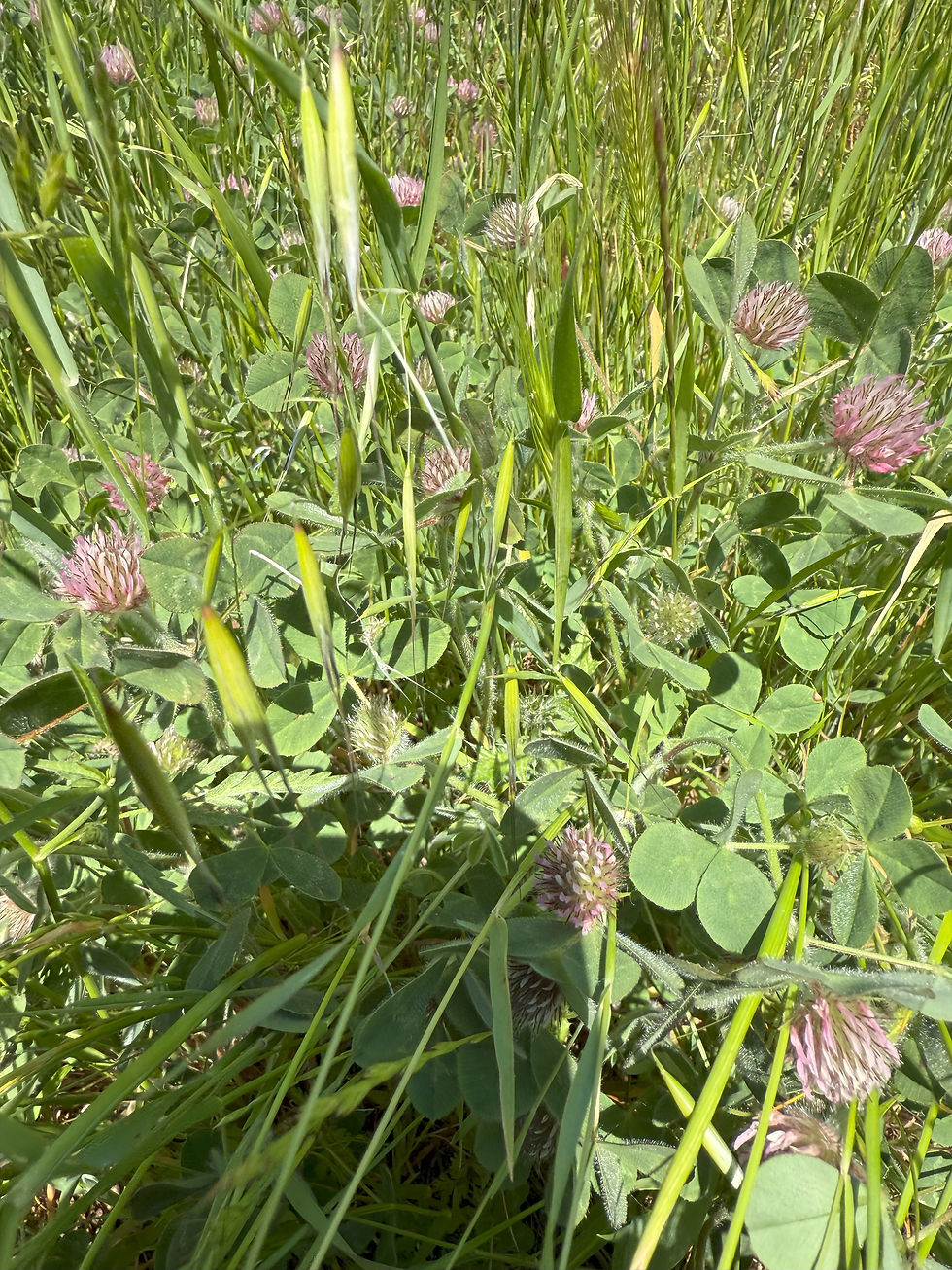
Stinging Nettle
- Jul 18, 2025
- 2 min read
Updated: Oct 29, 2025

The stinging nettle plant is among the most mineral-dense and useful plants on the planet. It’s found across North America, Europe, and Asia, and prefers moist soils near rivers, forests, and pastures. A mature plant can be four or five feet high, though the smaller urban variety will remain low to the ground. The leaves and stems have fine hairs filled with formic acid and histamine, which stings and leaves red marks when you come into contact with it.
The sting goes away once the nettle is dried or cooked, and it is at this point that it becomes safe and highly nourishing. Tests of the ash that results from burning nettle have shown that it contains up to twenty times more minerals than common vegetables [1][2]. Herbalists use it as a tonic for the whole body when feeling weak or low on vitality. It can support the kidneys, adrenals, and blood and is therefore a “when in doubt” herb.
Medicinally, nettle is best known for treating allergies, hay fever, hives, and even poison oak reactions [3]. The diuretic action supports people with gout or water retention by helping to flush uric acid from the body. The root is also used in men’s health support, particularly to improve urinary flow in benign prostatic hyperplasia (BPH) [4]. The high mineral content also lends the plant to traditional use for hair, skin, and nail health.
Blanched leaves can be eaten like spinach (added to soups, sautéed, blended into pesto). Nettle tea is a well-known spring tonic that is high in minerals and supports seasonal allergies. Tinctures are more concentrated, but since they lose minerals in the alcohol, are better used only for allergies.
[1] “Nutritional and pharmacological importance of stinging nettle (Urtica dioica).” Food Bioscience 49 (2022): 101808. https://pmc.ncbi.nlm.nih.gov/articles/PMC9253158/
[2] Paulauskiene, T., et al. “Stinging Nettle (Urtica dioica L.): Nutritional Composition, Bioactive Compounds and Health-Promoting Properties.” Molecules 27, no. 16 (2022): 5219. https://doi.org/10.3390/molecules27165219
[3] European Medicines Agency. “Assessment report on Urtica dioica L.; Urtica urens L., herba.” (Revision 1). https://www.ema.europa.eu/en/documents/herbal-report/final-assessment-report-urtica-dioica-l-urtica-urens-l-herba-revision-1_en.pdf
[4] Safarinejad, M. R. “Urtica dioica for treatment of benign prostatic hyperplasia: A prospective, randomized, double-blind, placebo-controlled, crossover study.” Journal of Herbal Medicine 3, no. 4 (2013): 130-137. https://pubmed.ncbi.nlm.nih.gov/16635963/