Sheep Sorrel
- Jul 26, 2025
- 1 min read
Updated: Oct 29, 2025

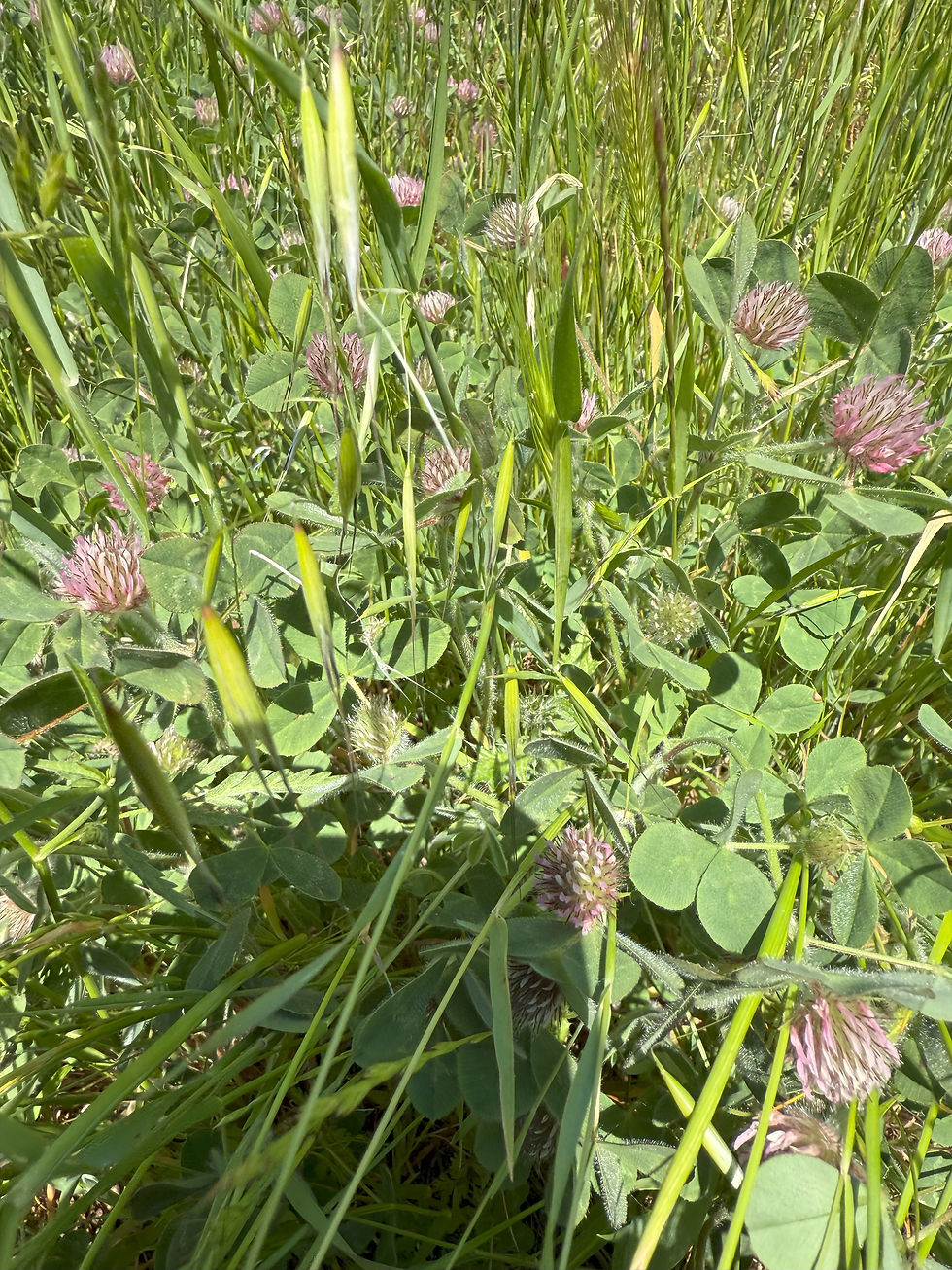
Sheep sorrel is found in meadows, pastures, and open spaces throughout North America and Europe. The low, slender perennial has arrow-shaped leaves, with tall reddish-green flower stalks in summer. Sheep sorrel is tangy, with oxalic acid responsible for its tart, lemony flavor.
The young leaves are edible, and can be used sparingly in salads, soups, or sauces for a sharp, lemony tang. It is a foraging favorite as a bright wild green to liven up any simple meal [1]. Medicinally, sheep sorrel has been used as a mild diuretic and digestive aid, helping stimulate appetite and sluggish digestion [2]. It is one of the four herbs traditionally used to make Essiac tea, a blend with a long history of use in North American folk medicine [3].
Sheep sorrel is high in oxalates and should only be consumed in moderation, especially by those with kidney issues [2]. Nonetheless, it is one of the most recognizable and hardy meadow herbs — a humble little plant with a little flavor, and a lot of history.
[1] North Carolina State University Extension. “Rumex acetosella (Sheep Sorrel).” https://plants.ces.ncsu.edu/plants/rumex-acetosella/.
[2] Vasas, Andrea, Orsolya Orbán-Gyapai, and Judit Hohmann. “The Genus Rumex: Review of Traditional Uses, Phytochemistry and Pharmacology.” Journal of Ethnopharmacology 175 (2015): 198–228.PDF access: https://todayspractitioner.com/wp-content/uploads/2024/08/Vasas-2015-genus-rumex-review-traditional-phytochemistry-pharmacology.pdf
[3] Memorial Sloan Kettering Cancer Center. “Sheep Sorrel.” Integrative Medicine Database. Last updated February 24, 2022. https://www.mskcc.org/cancer-care/integrative-medicine/herbs/sheep-sorrel