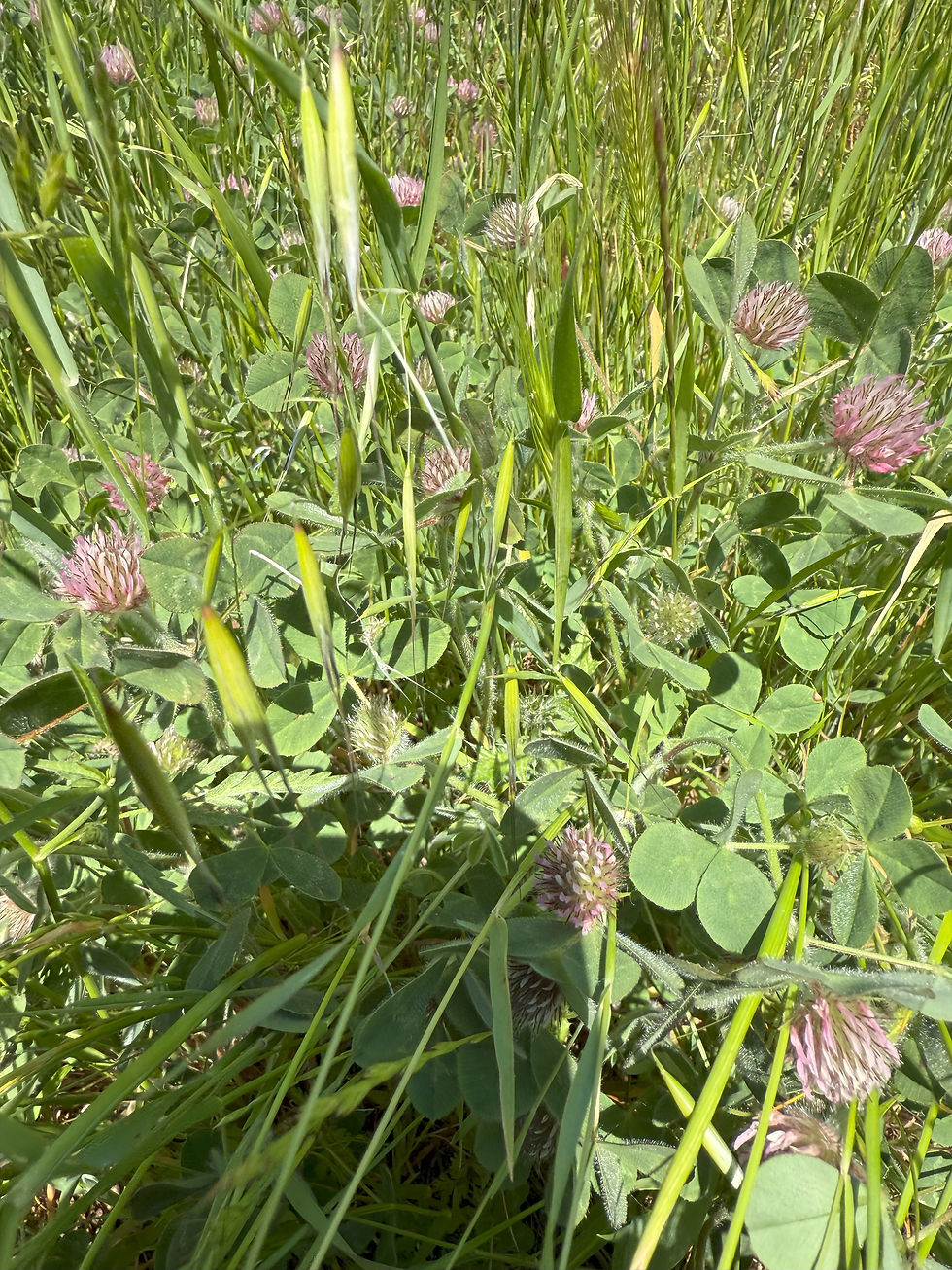
Rigid Hedgenettle
- Jul 14, 2025
- 2 min read
Updated: Oct 29, 2025

Rigid hedgenettle is a western North American native perennial herb of dry meadows, open woodlands, and grasslands. This upright plant, often 1 to 3 feet tall, has square stems and paired opposite leaves that are toothed on the edges. As with all mints, the leaves are rough and slightly wrinkled and the stems are square in cross-section. Crush a leaf and you will detect a sharp, earthy scent. The fragrance of rigid hedgenettle isn’t as sweet as peppermint or spearmint, for example, and is often described as more pungent or harsh [1][2].
During summer, rigid hedgenettle bears spikes of small tubular flowers, pale yellow to purple, which are attractive to bees and other pollinators. Less is known of the culinary and medicinal properties of rigid hedgenettle than for more familiar herbs like basil, thyme, and sage. Still, this plant, its distant relatives in the mint family (Lamiaceae), and the traits that unite them form a story worth knowing.
Medicinally, many species of Stachys have been used traditionally as mild astringents and anti-inflammatories [3][4]. Rigid hedgenettle may also be used to prepare a tea or poultice to apply topically for sore muscles, eye strain, or fatigue, though this is now quite rare. Used as a teaching plant, rigid hedgenettle, and other members of the mint family, have been vital tools in passing down practical knowledge from generation to generation. In learning to recognize a mint in the wild, rigid hedgenettle is a clear and unmistakable example. Once you’ve found a plant and learned to trust the clues — square stem, opposite leaves, the smell of crushed leaves between your fingers — you will know the mints almost anywhere.
Today rigid hedgenettle is not used widely in cooking or herbal medicine, but it remains an important part of the mint story. The native plants of this family of herbs link the familiar herbs of the garden with the wild relatives that still grow across North America.
[1] Calflora. “Stachys rigida – Taxon Report.” https://www.calflora.org/app/taxon?crn=12037
[2] Friends of Edgewood. “Rigid Hedge Nettle — Stachys rigida var. rigida.” https://friendsofedgewood.org/rigid-hedge-nettle
[3] Tomou, Ekaterina-Michaela, Christina Barda, and Helen Skaltsa. “Genus Stachys: A Review of Traditional Uses, Phytochemistry and Bioactivity.” Medicines 7, no. 10 (2020): 63.https://doi.org/10.3390/medicines7100063
[4] Pashova, Stela, Diana Karcheva-Bahchevanska, Kalin Ivanov, and Stanislava Ivanova. “Genus Stachys — Phytochemistry, Traditional Medicinal Uses, and Future Perspectives.” Molecules 29, no. 22 (2024): 5345.https://doi.org/10.3390/molecules29225345