The Sickener
- Apr 14, 2025
- 2 min read
Updated: Oct 29, 2025

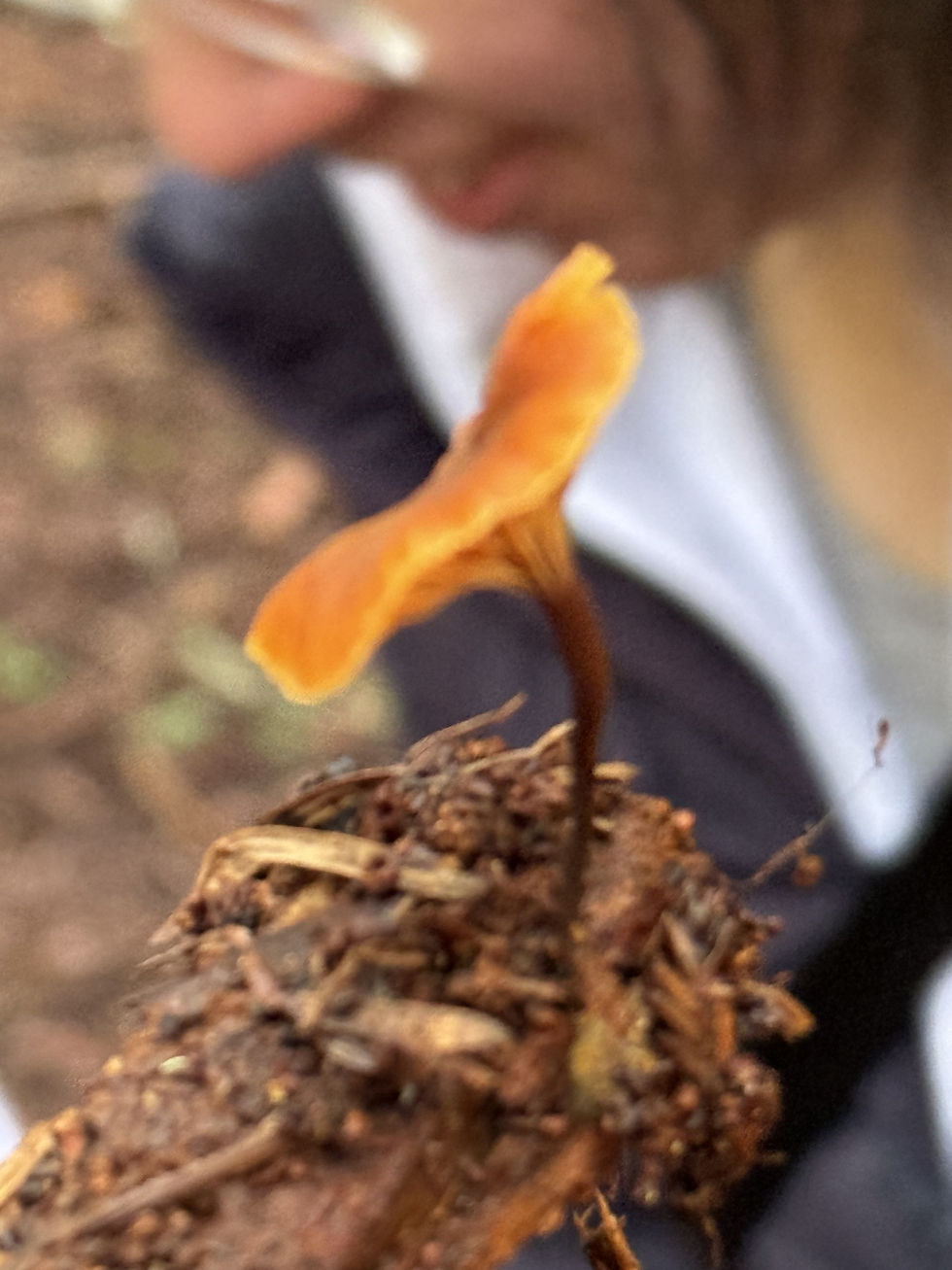
Russula emetica is a widespread species in the Northern Hemisphere and is particularly noticeable due to its large, scarlet to cherry-red cap, white gills, and crisp, brittle consistency. The cap typically cracks with a snapping sound when broken. R. emetica grows in coniferous and mixed forests in association with mossy soil from late summer to autumn. It is also known by several common names, including The Sickener, The Scarlet Russula, or The Red Ruffle [1].
Russula emetica, like many in its genus, forms ectomycorrhizal relationships with various trees, particularly pines, spruces, and birches. In this symbiotic association, the fungus increases the exchange of water and nutrients, such as nitrogen and phosphorus, from the soil to the tree roots while receiving carbohydrates produced by the host through photosynthesis. This mutualistic relationship enhances forest resilience, soil structure, and tree health [2][3].
This is an inedible mushroom that may be mildly toxic raw and is best to avoid, as it can cause gastrointestinal distress. This should not be confused with the fact that R. emetica can be cultivated with birch for medicinal purposes due to its antibacterial qualities and it is use to treat cancer patients on intravenous drips, which is quite different from eating the mushroom fresh from the wild [1][4]. Russula emetica is an indicator species for the mycorrhizal fungi and for woodland that has not been disrupted by human activity [5].
[1] First Nature.“Russula emetica (Schaeff.) Pers. — The Sickener.” First Nature: Fungi of Northern Europe and North America. https://first-nature.com/fungi/russula-emetica.php.
“Very common and widespread in coniferous woodlands … Make a meal of Russula emetica, however, and you can expect to feel very poorly indeed for quite a few days.”
[2] Wikipedia contributors.“Russula emetica.” Wikipedia: The Free Encyclopedia. Last modified October 2025. https://en.wikipedia.org/wiki/Russula_emetica.
“Like all species of Russula, R. emetica is a mycorrhizal fungus, and forms mutually beneficial partnerships with roots of trees … Preferred host plants are conifers, especially pines.”
[3] Looney, Brian P., and Felix Hampe.“Global Diversity and Host Evolution in a Diverse Clade of Ectomycorrhizal Fungi (Russula, Russulales).” Mycological Research. https://www.researchgate.net/profile/Felix-Hampe-2/publication/268799601_Global-diversity-and-host-evolution-in-a-diverse-clade-of-ectomycorrhizal-fungi_Russula_Russulales/links/5af19a150f7e9ba3664571e5/Global-diversity-and-host-evolution-in-a-diverse-clade-of-ectomycorrhizal-fungi-Russula-Russulales.pdf
[4] Totally Wild UK.“The Sickener (Russula emetica) — Identification.” Totally Wild UK. https://totallywilduk.co.uk/2021/12/01/the-sickener-russula-emetica-identification/