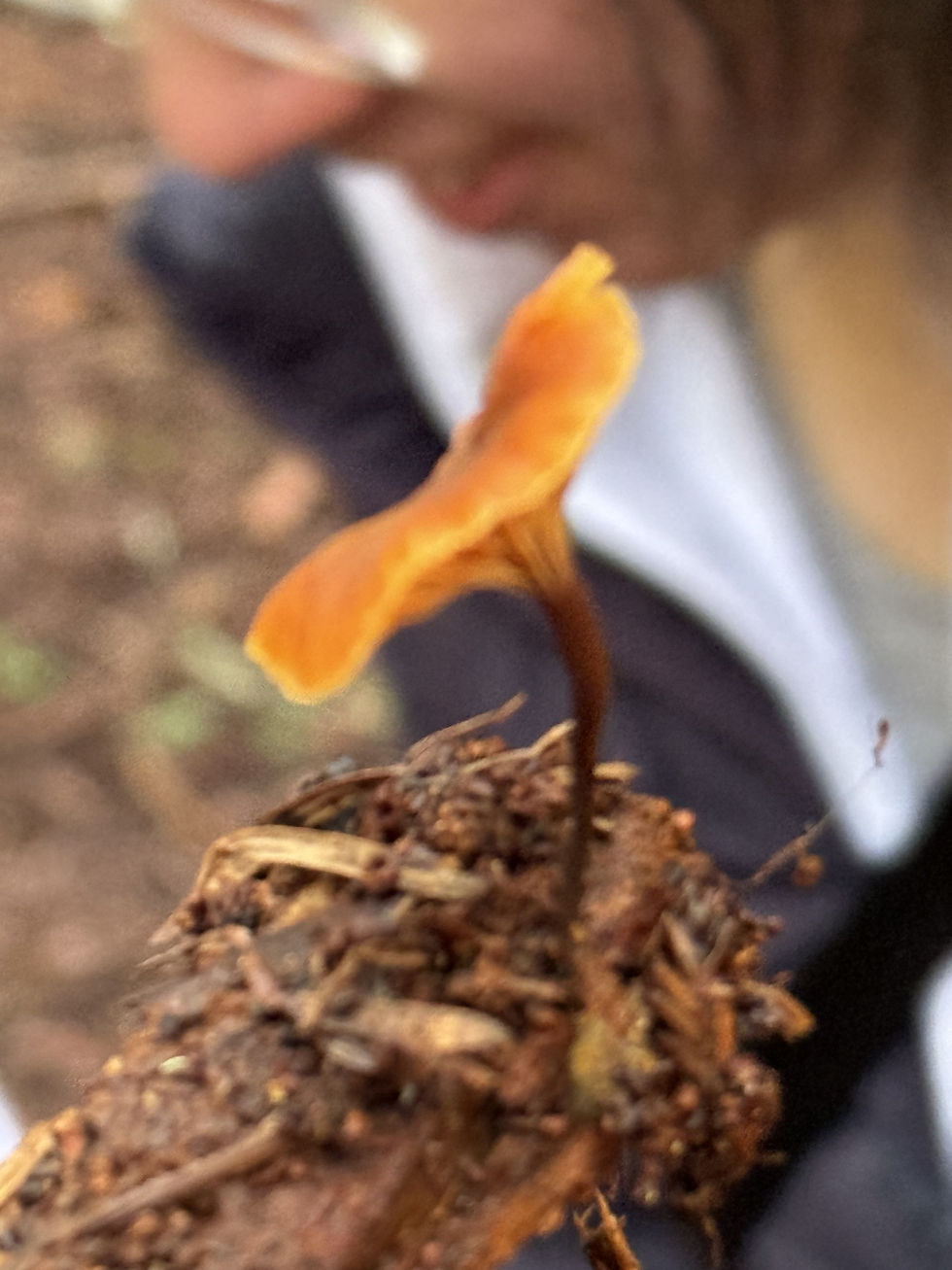
Phellinus chrysoloma
- Apr 24, 2025
- 2 min read
Updated: Oct 29, 2025

Phellinus chrysoloma is a perennial, polypore fungus that grows on hardwoods and conifers in temperate and boreal forests. The fruiting body of P. chrysoloma is thick, woody, and typically golden to yellowish-brown. The surface of the fruiting body darkens and becomes more woody with age. These perennial brackets can last for several years and may add new growth layers each year [1][2].
Ecologically, P. chrysoloma is a specialist wood decomposer that can break down both lignin and cellulose, the two main structural components of wood. By decomposing wood, this fungus plays a crucial role in releasing the carbon and minerals that are locked in the wood back into the environment, thereby enriching the soil and supporting the nutrient cycle necessary for forest regeneration [2][3].
The long lifespan of the fruiting bodies also contributes to microhabitat diversity. They can provide shelter for invertebrates and serve as nesting material for small forest organisms, thus extending the fungus's impact on the ecosystem beyond just decomposition [3].
In summary, through its perennial nature and its role in wood decomposition, Phellinus chrysoloma exemplifies the cycle of life and decay in forests. By transforming the remains of trees into a resource for new growth, this species plays a key role in long-term forest stability [1][4].
[1] ForestPests.eu. “Phellinus chrysoloma / Phellinus chrysoloma.” https://www.forestpests.eu/pest/phellinus-chrysoloma
[2] UPM Forest Life. “Phellinus chrysoloma – Species.” https://www.upmforestlife.com/species/phellinus-chrysoloma
[3] Stenlid, J., et al. “Unravelling the Phellinus pini s.l. complex in North America: a multilocus phylogeny and differentiation analysis of Porodaedalea.” Forest Pathology (2022). https://research.fs.usda.gov/treesearch/56263
[4] Burdsall, Harold H. Jr. “Current Research on Wood Decay in the USDA Forest Service: Focus on the Genus Phellinus.” USDA Forest Service General Technical Report PSW-GTR-128 (2005): 84–90. https://www.fs.usda.gov/psw/publications/documents/psw_gtr128/psw_gtr128_burdsall.pdf