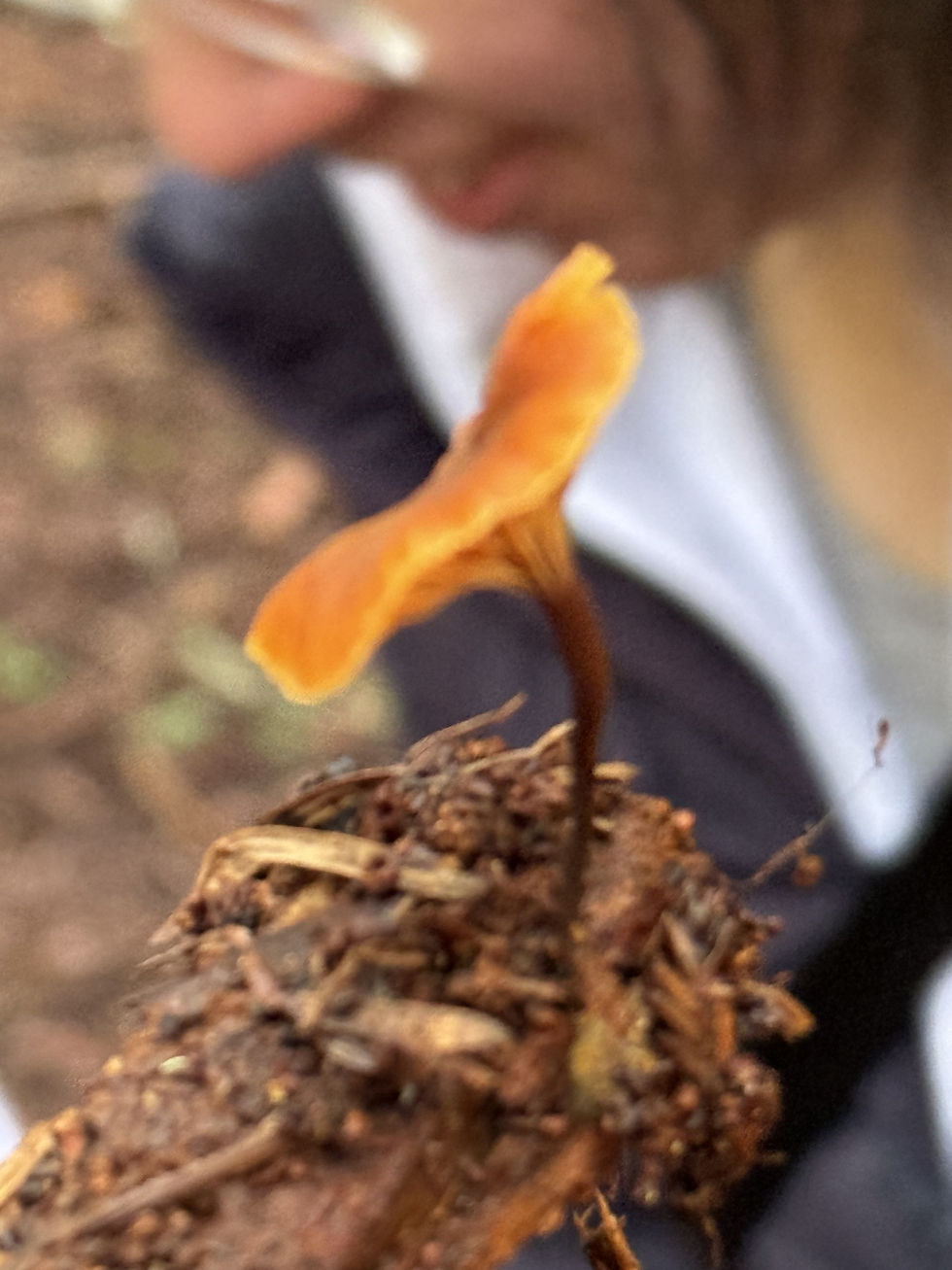
Mycena californiensis
- Apr 12, 2025
- 2 min read
Updated: Oct 29, 2025

Mycena californiensis is a saprotrophic mushroom species with a small, slender, and fragile fruiting body. This species occurs in forested regions of western North America, where it grows and fruits on litter, wood, or conifer needles in moist, shaded areas. The bell-shaped and translucent caps are whitish to pale gray or tan. Fruiting bodies of M. californiensis are ephemeral, most often observed following autumn rain [1][2].
Ecologically, M. californiensis is a decomposer of complex organic matter, such as cellulose, lignin, and other plant residues. Through decomposition, the species breaks down complex matter into simpler molecules, making nutrients available to the surrounding environment and soil. Mycena californiensis' saprotrophic activity on litter, wood, or needles also impacts nutrient cycling and availability in forest ecosystems, supports microbial and plant communities, and promotes microhabitat diversity. The maintenance of this diversity and stabilization of the nutrient cycling web are key factors in supporting the biodiversity and stability of forested environments [2][3].
Despite its small size, M. californiensis presence is an indicator of active, moisture-dependent decomposer activity in well-structured litter layers, in line with the generally accepted understanding that saprotrophic fungal fruiting is controlled by environmental conditions and resource availability [4].
[1] Siegel, Noah, and Christian Schwarz. “Mycena californiensis.” California Fungi: MykoWeb. https://www.mykoweb.com/CAF/species/Mycena_californiensis.html
[2] iNaturalist. “Mycena californiensis.” iNaturalist Taxon Database. https://www.inaturalist.org/taxa/337490-Mycena_californiensis
[3] Crowther, Thomas W., Lynne Boddy, and T. Hefin Jones. “Functional and Ecological Consequences of Saprotrophic Fungus–Grazer Interactions.” The ISME Journal 6, no. 11 (2012): 1992–2001.https://www.nature.com/articles/ismej201253.pdf
[4] Thoen, Ella, Christoffer Bugge Harder, Håvard Kauserud, Synnøve S. Botnen, Unni Vik, Andy F. S. Taylor, Audrius Menkis, and Inger Skrede. “In Vitro Evidence of Root Colonization Suggests Ecological Versatility in the Genus Mycena.” New Phytologist 227, no. 2 (2020): 601–612.Open-access repository: https://aura.abdn.ac.uk/handle/2164/14550