Porcini
- Apr 9, 2025
- 2 min read
Updated: Oct 29, 2025
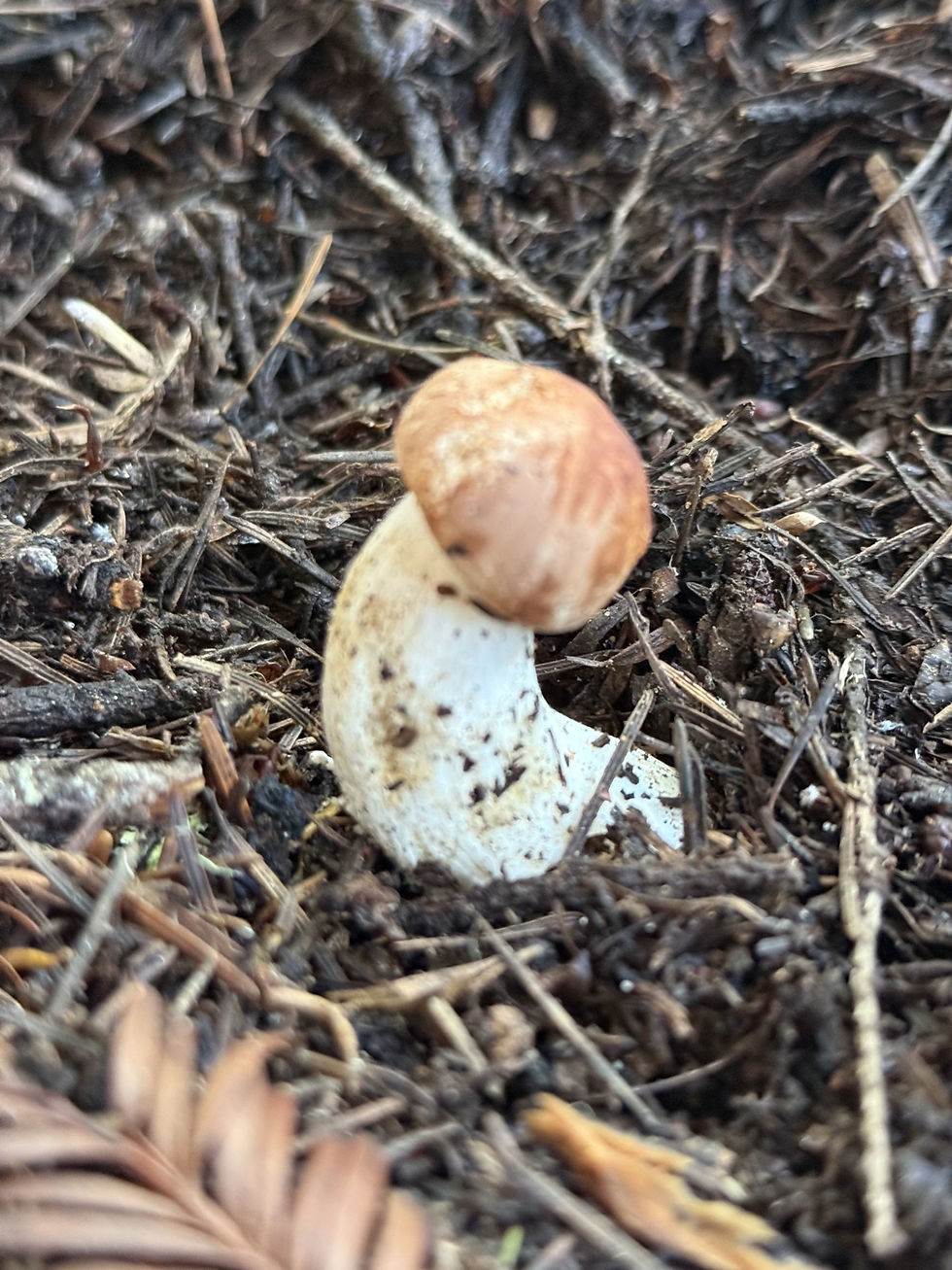
Boletus edulis, commonly called porcini, is a widely edible species of mushroom highly valued for its rich, nutty flavor and firm texture. Ecologically, it forms symbiotic associations with the roots of various trees, such as pine, spruce, fir, and oak, in the Northern Hemisphere. This mycorrhizal relationship benefits both the tree and the mushroom, helping the former to absorb water and nutrients while the latter receives carbohydrates [1][2]. Porcini mushrooms are recognized by their wide brown cap, thick reticulate stipe, and sponge-like pore surface. They have a stout stem and their caps, which can range from tan to deep brown, often develop a noticeable central depression as they mature. These mushrooms have a pleasant, earthy smell and are a favorite among both foragers and chefs [2].
Mycorrhizal networks are crucial for ecosystem sustainability. The ectomycorrhizal associations of B. edulis connect the roots of trees in a web-like system that can exchange water, nutrients, and other signaling molecules. These networks increase tree health and productivity, reduce soil erosion, and store significant amounts of carbon, making them essential for forest resilience and biodiversity [2][3]. Additionally, porcini are a key ingredient in many traditional dishes, such as Italian risotto and Eastern European soups, illustrating the close relationship between cultural cuisine and ecosystem health [4].
[1] First Nature.“Boletus edulis Bull. – Cep, Porcino or Penny-bun Bolete.” First Nature – Fungi of Northern Europe and North America. https://first-nature.com/fungi/boletus-edulis.php
[2] U.S. National Park Service.“Mycorrhizal Fungi.” Nature & Science at Mount Rainier National Park. https://www.nps.gov/mora/learn/nature/mycorrhizal-fungi.htm
[3] Mello, Antonietta.“State of the Art of the Research on Boletus edulis.” In Edible Ectomycorrhizal Mushrooms, edited by A. Zambonelli and G. Bonito, Soil Biology Vol. 34, 91–107. Springer, 2013.https://link.springer.com/chapter/10.1007/978-3-642-33823-6_5
[4] Amaranthus, Michael P.The Importance and Conservation of Ectomycorrhizal Fungi. Gen. Tech. Rep. PNW-GTR-431. Portland, OR: U.S. Department of Agriculture, Forest Service, Pacific Northwest Research Station, 2005.https://www.fs.usda.gov/pnw/pubs/pnw_gtr431.pdf