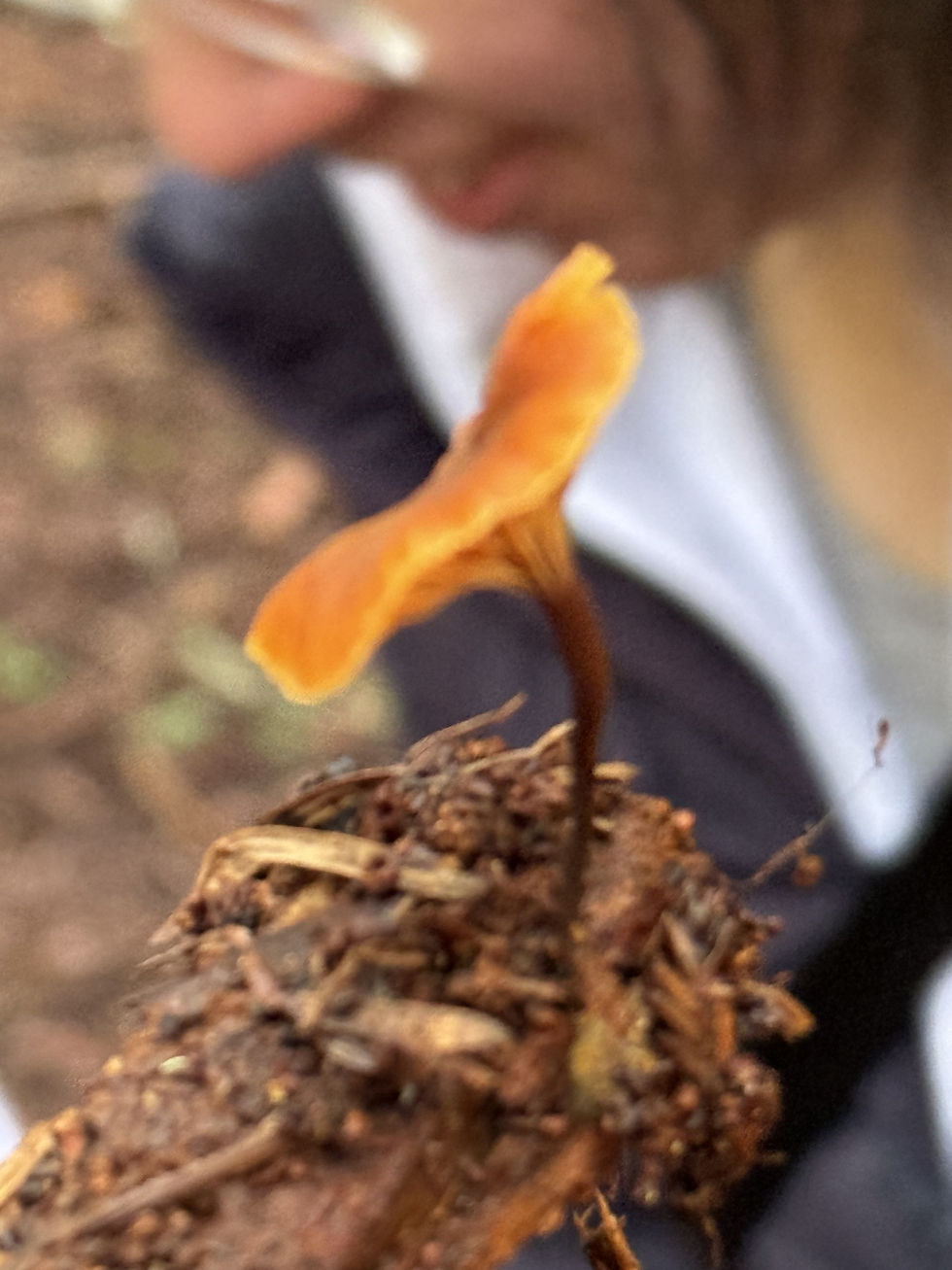
Rose-Tinted Amanita
- schen3154
- Apr 19, 2025
- 1 min read
Updated: Oct 29, 2025

Amanita roseotincta is a mycorrhizal species with a pale rose-tinted cap, white free gills, and a stipe that terminates in a unique, cup-like volva at its base. The surface of the cap is smooth and subtly tinged with shades of pink or blush, often fading towards the edges. It is one of the more demure yet refined species of the genus Amanita due to its soft coloring and symmetrical shape [1][2].
A. roseotincta is part of a vast underground mycorrhizal network that helps the fungus and its host trees to co-exist by exchanging water and minerals for sugars made by the tree through photosynthesis. The network increases water and nutrient absorption while providing the trees with key mineral resources and strengthens surrounding plant life, making the fungus an important part of its forest's resilience and soil health [3].
The relatively muted coloring of A. roseotincta could be an adaptation to a niche that moderates both light and moisture in the shaded soil it grows in. It is uncommon for Amanita roseotincta to be found in large quantities; however, each time the species fruits, an important ecological relationship is quietly at work to sustain the fabric of the forest.
[1] Texas Mushrooms. “Rose-Tinted Amanita (Amanita roseotincta) – Mushroom Identification, Habitat & Uses.” https://www.texasmushrooms.org/en/amanita_roseotincta.htm
[2] PictureMushroom. “Rose-Tinted Amanita (Amanita roseotincta).” https://picturemushroom.com/wiki/Amanita_roseotincta.html
[3] Cai, Qing et al. “The evolution of ectomycorrhizal symbiosis and host-plant switches are the main drivers for diversification of Amanitaceae (Agaricales, Basidiomycota).” BMC Biology 22 (2024): 230. https://doi.org/10.1186/s12915-024-02031-8